
How Many Carbs Per Hour for a Marathon? What the Pros Do (and What You Actually Need)

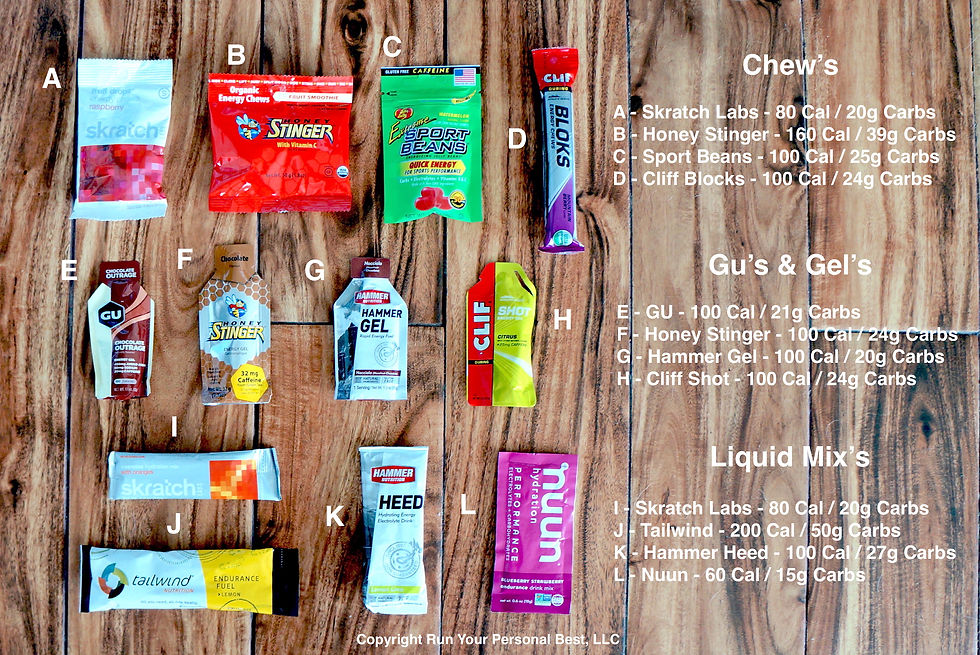
You may have noticed a big shift in elite marathon fueling: many pros now take in 90–120 grams of carbohydrate per hour during races, far more than was previously recommended. My first marathon was the Philadelphia Marathon in 2012. Back then, fueling was not a thing. I took four 24 gram carbs gels. I finished in 2:47, but I have to walk the last half mile.
So the obvious question is… should you be doing the same?

Why marathon fueling guidelines have changed
For decades, sports nutrition advice capped carb intake at around 30–60g per hour. That guidance was based on a simple limitation: the body's main carbohydrate transporter (called SGLT1) can only absorb about 60 grams of glucose per hour before it becomes saturated.
The breakthrough came when researchers discovered that fructose uses an entirely separate transporter — GLUT5. By combining glucose and fructose (often in a 2:1 ratio), athletes can absorb significantly more total carbohydrate without overwhelming either pathway. This is why most modern marathon gels and sports drinks use a glucose-fructose blend rather than glucose alone.
The result:
60g/hr remains the ceiling for glucose-only fueling
90g/hr is achievable with a glucose-fructose mix, and is now a widely recommended target for marathon racing
Up to 120g/hr has been tested in elite runners, though the evidence that it improves performance over 90g/hr is still emerging
This doesn't mean "more is always better." It means fueling is about what your gut can absorb and tolerate while running, not just raw calorie count.
How many carbs per hour do you need during a marathon?
For most runners, the answer is not automatically 120g/hr.
Your ideal carbohydrate intake during a marathon depends on several factors:
How long you'll be running. A 3-hour marathoner burns through glycogen faster than someone running 4:30, but both benefit from fueling. Glycogen stores typically last about 90–120 minutes at marathon effort, which is why fueling matters for nearly everyone racing 26.2.
How hard you're running. Higher intensity means a greater proportion of energy comes from carbohydrates rather than fat. Faster runners generally benefit from higher intake rates.
Your gut training and fueling experience. This is the factor most runners underestimate.
Here's a practical starting framework:
Short runs (under 60–75 minutes): No fuel needed for most runners
Long easy runs: 40–60g of carbs per hour
Marathon race pace and key workouts: 60–90g of carbs per hour
Elite or highly trained runners at high intensity: Up to 90–120g/hr — if the gut has been trained to handle it
Higher intakes only make sense if you're running at a strong intensity for a long time and you've systematically built up your tolerance.
The biggest limiter isn't your fitness — it's your gut
Here's what catches most runners off guard: the bottleneck in marathon fueling isn't your muscles or your aerobic system. It's your digestive system.
When you run, blood flow is redirected away from your gut and toward your working muscles. That means your stomach and intestines are operating at reduced capacity right when you're asking them to process gels, chews, or sports drink. The result — for runners who haven't prepared — is bloating, cramping, nausea, or worse.
GI distress during races is extremely common. Studies estimate that 30–90% of endurance athletes experience some form of gastrointestinal issues during competition. It's also one of the most common reasons athletes DNF at longer events.
But here's the good news: your gut is trainable.
How to train your gut for marathon fueling
If gels have upset your stomach before, you're not broken. Like your legs and lungs, your digestive system adapts with consistent practice. Research shows that regularly consuming carbohydrates during training runs increases tolerance by upregulating the transporters that shuttle sugars across the intestinal wall and by improving the rate of gastric emptying.
Here's how to build your gut tolerance over your training cycle:
Start early in your training block. Begin gut training at least 8–10 weeks before your goal race. This gives your body time to adapt without pressure.
Practice fueling on long runs — not race day. Your long run is your fueling laboratory. Never introduce a new gel, chew, or drink mix on race morning.
Increase gradually. Start around 30–40g of carbs per hour and add 10–15g every 2–3 weeks. A reasonable progression might look like: 30–40g → 50g → 60g → 75g → 90g/hr over several weeks.
Take small amounts frequently. Rather than one large bolus, aim for small doses every 15–20 minutes. This is easier on the stomach and improves absorption.
Practice at race-effort intensity, not just easy runs. Your gut responds differently at marathon pace than on a conversational long run. Include fueling practice in tempo runs and marathon-pace sessions.
Use the exact products you plan to race with. Check what your race will offer on course, and either train with those products or plan to carry your own.
Pair carbs with adequate hydration and sodium. Water helps your body absorb carbohydrates, and sodium supports fluid retention and gut transport. Don't fuel without hydrating.
Be patient. Some discomfort in training is normal and expected. Adaptation takes weeks, not days — and progress isn't always linear.
What about the glucose-to-fructose ratio?
If you're aiming for 90g/hr or above, the type of carbohydrate matters. Products with a 2:1 glucose-to-fructose ratio have the most research behind them for intakes up to 90g/hr. For intakes closer to 110–120g/hr, a 1:0.8 ratio (more fructose relative to glucose) may improve absorption efficiency.
In practical terms: check the label on your gels or drink mix. Most modern endurance fueling products already use a glucose-fructose blend. Brands like Maurten, SiS Beta Fuel, and Neversecond all formulate around these ratios. If you're mixing your own, aim for multiple carbohydrate sources rather than maltodextrin or glucose alone.
The real takeaway
Elite-level fueling isn't about copying what the fastest runners do. It's about finding the highest carbohydrate intake you can tolerate consistently — and building toward that number through deliberate practice.
Whether that's 60g/hr or 90g/hr or beyond, the process is the same: start where you are, increase gradually, practice at race effort, and give your gut the same respect you give your training plan.
Your stomach deserves a training block, too.


